
S.T.O.P
"I have a very particular set of skills..." - TAKEN

Hi, I’m Charlie. This is where I write about my salty adventures on Ireland’s Wild Atlantic Way. Subscribe for trip reports and notes from a cottage by the sea.
I spent St. Patrick’s Day in a green drysuit. The suit and I got a thorough rinsing on the “spin cycle” among the rocks at the base of a sea cliff and in the surf zone. (That orange dot in the foam [below] is my helmet)
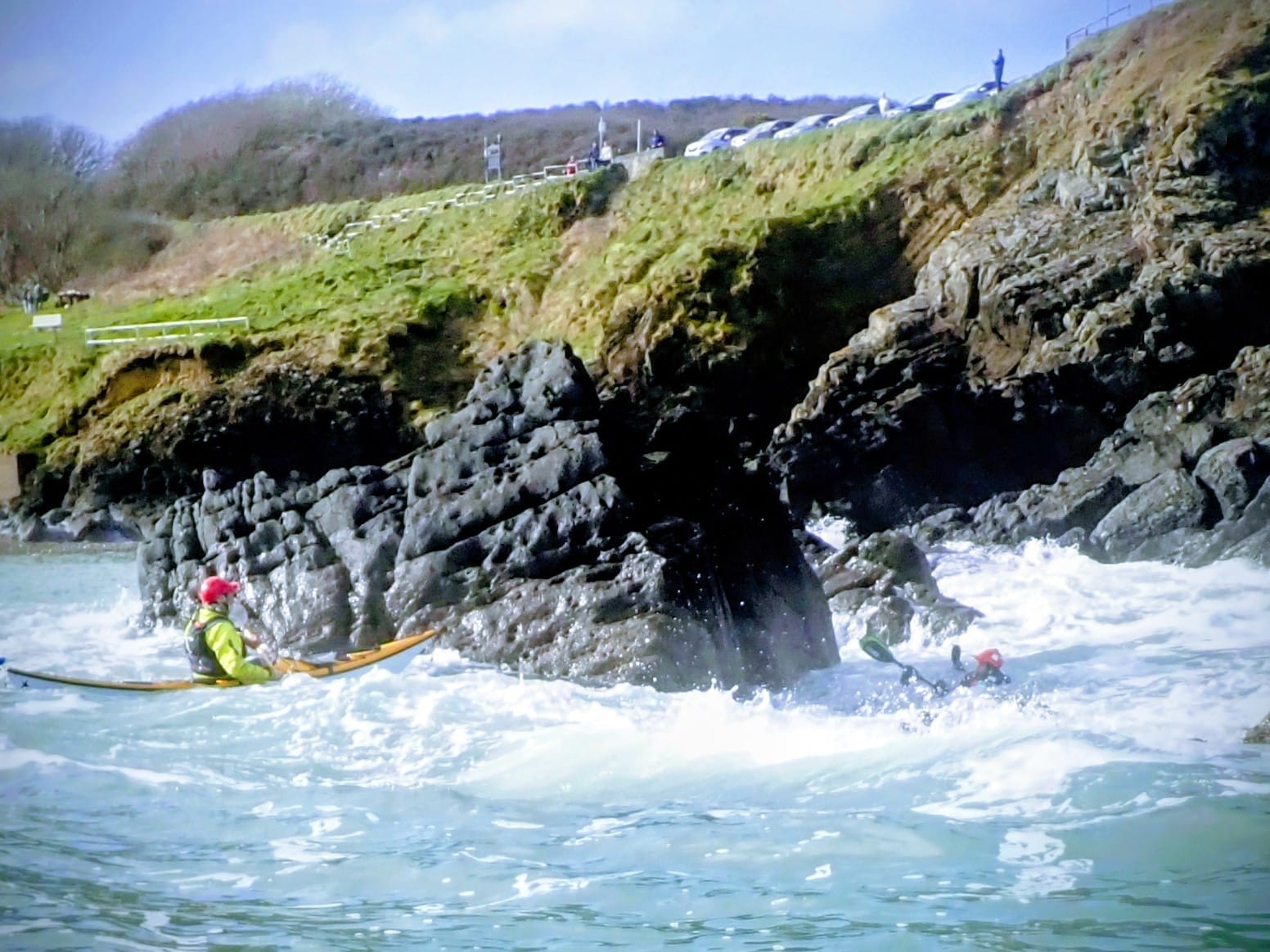
I spent the holiday weekend on an incident management course for sea kayak guides in training hosted on the Copper Coast by David Walsh, who you’ll know from past trip reports, and Jeff Allen, who has circumnavigated Japan and once held the round-Ireland record.
We started each morning with classroom work followed by long, cold days on the water, drilling complex scenarios in challenging conditions. Like a high-stakes game of Dungeons & Dragons, these role-plays could get worse or better, depending on how we dealt with them and worked as a team. We learned quickly that there is no “getting it right,” there’s only room for learning and improvement.


After “ENDEX,” to quote Jeff, on the last day, the 10 of us shared what we each took away from the experience, conceding that you might only get one big takeaway from four days packed with so much knowledge.
My one takeaway was S.T.O.P.
We shouted it, along with the nature of the incident, to kick off the rescue, as in, “STOP! capsize.”
It stands for: Stop, think, observe, perform. This is the order of operations for a rescue. There’s a lot to say about each step, but for me, the key takeaway was the order they’re in: think and observe before you perform. Pause before taking any action.
Natural helpers and doers have to train this out of themselves, especially on the water, where rushing in can be deadly for rescuer and casualty alike.
I learned to STOP training for life-and-death situations, but it’s just as useful (and potentially lifesaving) ashore in everyday life. And I mean every day. I’ve used it three times today:
Pressed for a quick answer in a work meeting - S.T.O.P
Baby playing with a choking hazard - S.T.O.P
Baby picked up the cat’s latest hairball and ate it - S.T.O.P
The next action you take and its outcome, depend on your skills and on factors that may be beyond your control. When you S.T.O.P you acknowledge that there is no situation you can improve by rushing or panicking.
Rotor wash
After St. Patrick’s Day weekend, I didn’t have a hangover. I did have withdrawl symptoms from having spent a few days back in expedition mode. Fortunately, Lifeboat training offered some hair of the dog in the form of a joint exercise with Rescue 115, a Coast Guard helicopter crew based in Shannon.
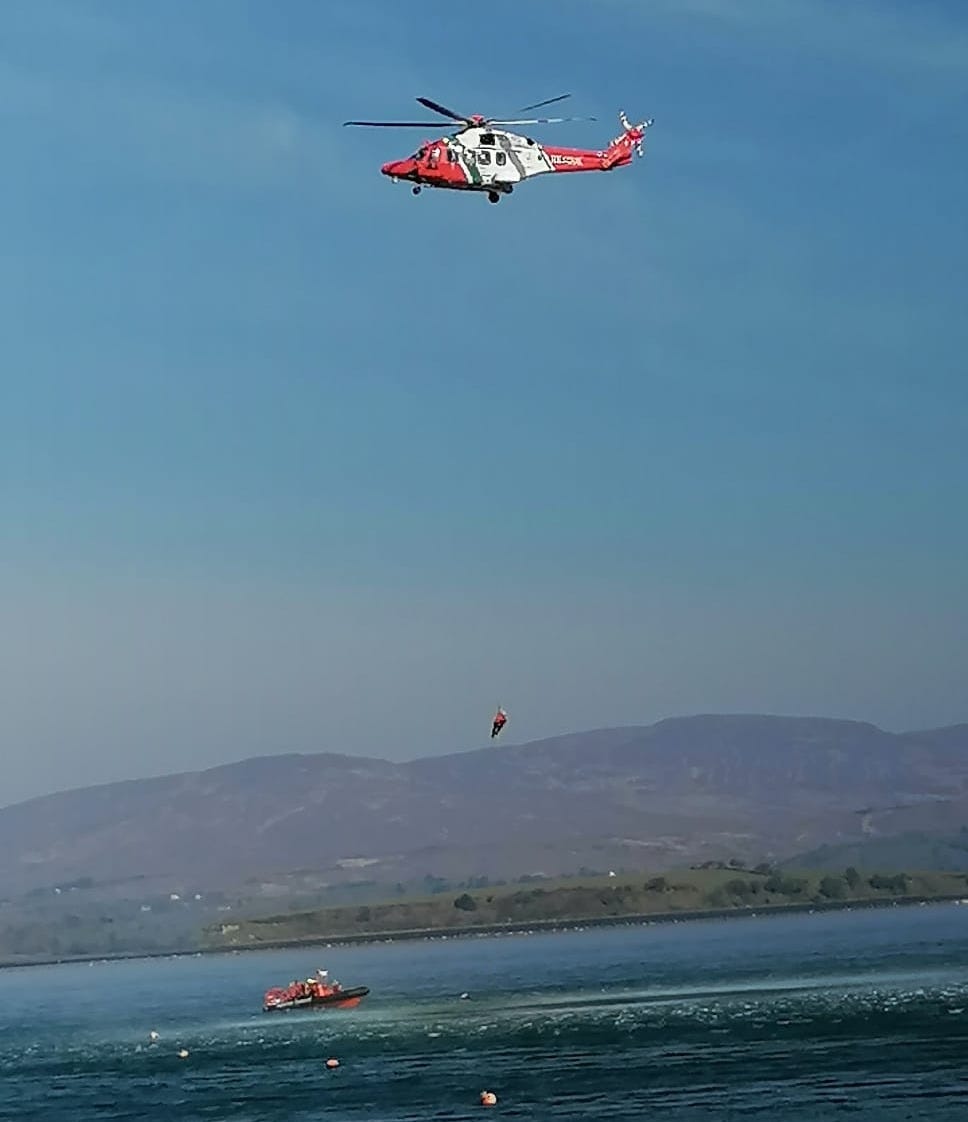
This crew knew how to S.T.O.P for sure. Light winds made for challenging conditions, and they spent time and fuel getting their position just right to avoid blowing our boat out of the way while still being close enough to lower their winchman.
Our crew were winched and lowered one at a time, giving our helm, the pilots, and the winchman vital reps on a difficult exercise. It was a lot of fun being the one in the harness, less so standing on deck, being buffeted by the rotor wash, or on the radio trying to hear our comms from the flight crew over the wind and the rotors.
When it was time to refuel, the helo hoisted up the winchman and gave an Irish goodbye, flying down the Bay as the water settled around us.
P.S. When I’m not having adventures, I’m helping other people write about theirs. If you or someone you know has an amazing story, I’d love to hear it.
— Charlie
Kokatat is the official gear sponsor of The Lap.

The lap is fueled by Resilient Nutrition’s Long Range Fuel and bars.
CH Marine provided a VHF radio and other safety equipment.
Camp kit and cooking gas provided by Paddle & Pitch. Wool baselayers by Aclima. Trolley by KCS. REAL Field Meals at a discount from Adventure.ie. Discounts from GreatOutdoors.ie. Expedition coffee by 3fe.